Secure Code Review
Secure code review is a crucial process in ensuring the integrity and security of software applications. It involves a meticulous examination of the source code to identify and mitigate potential vulnerabilities that could be exploited by malicious actors.
Key Aspects of Secure Code Review:
Objectives:
Identifying Vulnerabilities: The primary goal is to uncover security weaknesses such as injection flaws (SQL injection, XSS), authentication issues, access control problems, and other vulnerabilities.
Quality Improvement: It also helps improve the overall quality of the codebase by identifying logic errors, performance bottlenecks, and adherence to coding standards.
Process:
Manual Review: Experienced developers and security experts manually inspect the code line by line, focusing on potential vulnerabilities and coding best practices.
Automated Tools: Utilizing automated scanning tools to detect common issues like known vulnerabilities in libraries, configuration mistakes, or syntax errors.
Combination Approach: A combination of manual review and automated tools ensures comprehensive coverage of security concerns.
Best Practices:
Code Standards: Ensuring adherence to coding standards and guidelines such as OWASP (Open Web Application Security Project) recommendations.
Threat Modeling: Understanding the application’s architecture and identifying potential threats to prioritize review efforts effectively.
Peer Review: Involving peers in the review process to leverage collective expertise and perspectives.
Documentation:
Detailed Reports: Providing comprehensive reports detailing identified issues, their potential impact, and recommended fixes.
Actionable Insights: Ensuring that findings are actionable, with clear guidance on how to remediate vulnerabilities and improve code quality.
Integration with SDLC:
Early Integration: Ideally, code reviews should be integrated into the Software Development Life Cycle (SDLC) as early as possible to catch issues before they become entrenched.
Continuous Improvement: Implementing code review as an iterative process to continuously improve the security posture of the application.
Training and Awareness:
Developer Training: Providing training sessions to developers on secure coding practices and common vulnerabilities to reduce the likelihood of introducing security flaws.
Awareness Programs: Raising awareness among developers about the importance of security and their role in maintaining it throughout the development lifecycle.
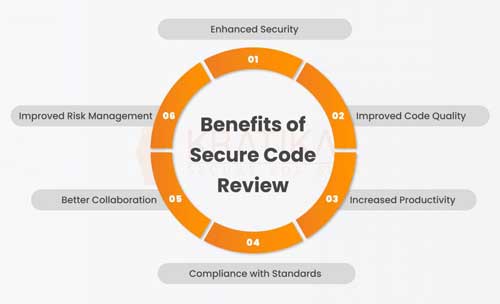
Benefits:
Risk Mitigation: By identifying and fixing vulnerabilities early, the risk of security breaches and their associated costs (financial, reputational) is significantly reduced.
Compliance: Meeting regulatory and industry standards for software security, which is increasingly important in today’s digital landscape.
Enhanced Trust: Building trust with users and stakeholders by demonstrating a commitment to robust security practices.
In conclusion, secure code review is not just a task but a critical component of a holistic approach to software security. It requires expertise, thoroughness, and integration into development processes to effectively mitigate risks and ensure the resilience of software applications against evolving threats.